Our vision is to develop well-rounded, confident, resilient and responsible individuals who aspire to achieve their full potential. We will do this by providing a welcoming, happy, safe and supportive learning environment in which everyone is equal and all achievements are celebrated. We follow the 2014 National Curriculum but ensure a bespoke learning experience for our Brookside children.
Curriculum
For more information on the school curriculum please contact the school office on:
Email: office@brookside.leics.sch.uk
Tel: 0116 271 3680
Curriculum Overviews
For an overview of the main topics taught in each year group, browse the class pages section of the website.
Please note: with regard to religious education, parents and carers should be aware they have the right to withdraw their child from all or part of RE. Please contact the school office for further information.
Art and Design
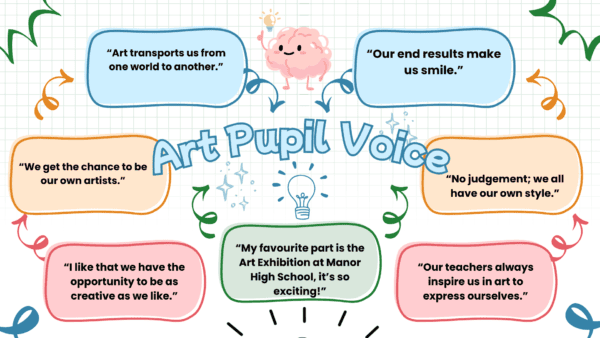
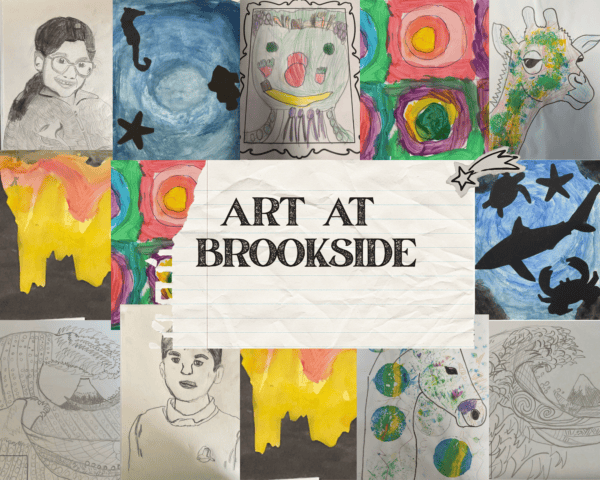
At Brookside Primary School, we value the importance of Art and Design as a powerful means of creativity, communication and self-expression. We believe that every child is entitled to a rich and inspiring art education that nurtures individuality, independence, resilience and reflective thinking.
It is our intent to provide opportunities for every child to explore, experiment and develop their artistic skills while fostering curiosity and imagination. Through engaging and meaningful experiences, children will learn about a range of artists, techniques and cultures, enabling them to appreciate and understand the role of art in the wider world. We want our pupils to become creative, resilient and reflective learners who feel confident expressing their ideas and individuality through art.
Through studying a diverse range of artists, designers and craftspeople from different cultures, backgrounds and historical periods, pupils gain an appreciation of artistic achievement and cultural heritage. We aim to broaden children’s understanding of the world around them while helping them recognise the value and impact of art across societies and throughout history.
We believe that art should be both enjoyable and meaningful. Children are encouraged to use visual language to communicate ideas, emotions and experiences, whilst developing the confidence to evaluate, refine and celebrate their own work. We want our pupils to understand that the creative process is just as important as the final outcome and to take pride in their artistic achievements.
Sketchbooks play an important role in our art curriculum, providing children with opportunities to record observations, develop ideas, practise techniques and reflect on their learning. These personal journals encourage experimentation, creativity and growth, helping pupils to see the journey behind every finished piece of artwork.
Through our Art and Design curriculum, we aim to inspire a lifelong appreciation of creativity and equip children with the skills, confidence and enthusiasm to express themselves through art.
French Curriculum Intent
Learning a foreign language is a liberation from insularity and provides an essential opening to other cultures. In Brookside, we teach our children French to generate a fascination for words and how language works, a wider curiosity about the peoples and cultures of French-speaking countries and the foundational knowledge to support confident communication in French. Based on the Rachel Hawkes scheme of work, our curriculum aims:
• To develop confidence in communicating in another language: We aim to develop pupils’ listening, speaking, reading, and writing skills in French so that they can understand and respond to spoken and written language with increasing confidence, fluency, and accuracy.
• To foster curiosity and enthusiasm for language learning: Our curriculum encourages children to enjoy language learning through engaging topics, meaningful contexts, songs and interactive activities that inspire a fascination for words and how language works.
• To build strong foundations in phonics, vocabulary, and grammar: We explicitly teach the key sound-writing relationships, high-frequency vocabulary, and essential grammatical structures that pupils need to communicate independently and successfully in French.
• To develop oracy and accurate pronunciation: Through regular opportunities for oral rehearsal, speaking, and listening, pupils build confidence in pronunciation and conversational French, enabling them to express ideas and respond to others effectively.
• To deepen understanding of French culture and the wider world: We introduce pupils to the traditions, geography, customs, and cultures of France and other French-speaking countries, helping them appreciate diversity and develop global awareness.
• To make meaningful connections between languages: Our curriculum supports pupils in recognising similarities and differences between French, English, and any heritage languages they may speak, deepening their understanding of language structure and communication.
• To prepare pupils for future language learning: We aim to provide pupils with the knowledge, skills, and confidence needed for a smooth transition into Key Stage 3, establishing strong foundations for continued language study.
This intent ensures that our Modern Foreign Languages curriculum develops not only language knowledge and communication skills, but also curiosity, cultural understanding, resilience, and a lifelong appreciation of languages and the wider world.
Our Geography Curriculum Intent
• To develop knowledge and skills for geographic exploration: We aim to equip pupils with core geographical knowledge and the essential skills to investigate and analyse the world geographically, fostering their ability to observe, record, and interpret geographical information with confidence.
• To explore and compare local and global environments: Our curriculum encourages pupils to investigate their own locality and draw comparisons with diverse locations around the world, deepening their understanding of different cultures, climates, and landscapes.
• To build awareness of diverse maps and their uses: We introduce pupils to a variety of maps and mapping techniques, enabling them to interpret the information these provide and understand their importance in understanding places and environments.
• To develop geographic vocabulary for meaningful engagement: We focus on building a strong foundation in geographic language, empowering pupils to discuss, question, and connect with the world around them using appropriate terminology.
• To express informed opinions about places and people: Our curriculum encourages pupils to think critically about human and physical geography, allowing them to form and articulate their own perspectives on people, places, and environmental issues.
History Curriculum intent
At Brookside Primary School, our History curriculum is ambitious, carefully sequenced and underpinned by our core values, the EYFS framework and the National Curriculum, with support from the Chris Quigley Essentials curriculum to ensure clear progression across KS1 and KS2. Pupils study significant people, events and developments from the past while developing the disciplinary skills of a historian through enquiry, critical thinking and analysis of evidence. Our curriculum also reflects a diverse past and builds pupils’ cultural capital through local history, educational visits, visitors, assemblies and celebration days, helping them to make meaningful connections between the past and the present. Through our focus on inclusion, pupils develop an understanding of a wide range of voices and experiences, ensuring that all children see themselves reflected in the subject. Through our focus on sustainability, pupils explore how history helps us understand the changing world and the impact of human actions over time. By revisiting key substantive threads such as power, conflict, civilisation, democracy, trade and migration, pupils deepen their knowledge, broaden their historical vocabulary and grow in confidence as thoughtful, reflective historians.
Curriculum Intent:
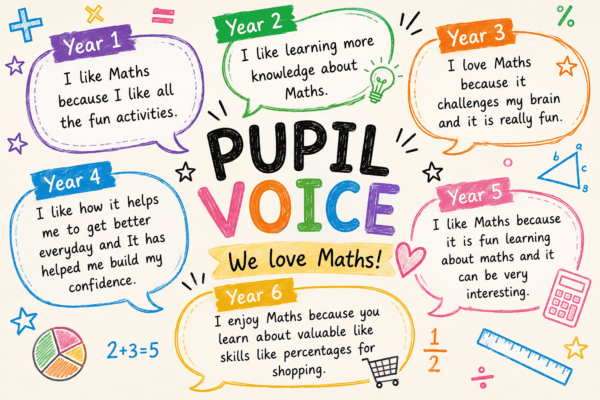
At Brookside we believe that mathematics is an essential everyday life skill which provides pupils with powerful ways to describe, analyse and change the world. Our maths curriculum is based on the 3 aims of the national curriculum – to develop fluency, reasoning and problem-solving skills. We incorporate a mastery style of teaching where all children are challenged and encouraged to excel in maths. New mathematical concepts are introduced using a ‘concrete, pictorial, abstract’ approach with clear models and images to support their understanding. Maths concepts are embedded through making links and connections with the wider curriculum. We are committed to developing children’s curiosity about maths and foster a sense of enjoyment and curiosity about the subject.
To support our planning, we use White Rose Maths, a structured scheme that aligns with our medium-term plans. This resource guides us in breaking down key concepts into more manageable steps, allowing children to develop their confidence and fluency.
Examples of Knowledge Organisers
Year 4 Position And Direction KO
Article 31: Every child has the right to relax, play and take part in a wide range of cultural and artistic activities.
Intent
Music is a universal language that embodies one of the highest forms of creativity. At Brookside Primary School, we are dedicated to creating an enjoyable and engaging experience of music for all children. By encouraging the children to participate in a variety of musical experiences, we are actively increasing their creativity, self-confidence and sense of achievement, whilst at the same time, allowing all pupils to develop their love of music.
We aim to provide a music curriculum which will enable each child to be successful in reaching their full potential.
Music Intent, Implementation And Impact
At Brookside, we strive to create an oracy-rich community where we develop confident and articulate learners who communicate respectfully in a range of contexts.
We teach and empower all children to use and value their voice, to foster curiosity and to build their confidence.
Oracy gives every child an opportunity to become active citizens who fulfil their potential, flourish in school and be prepared for later life.
We’re a Voice 21 Oracy School!
Voice 21 is the national oracy education charity. They advocate for and support schools in delivering a high-quality oracy education.
In becoming a Voice 21 Oracy School, we are joining a network of over 1,200 Voice 21 Oracy Schools across the UK that are transforming teaching and learning through talk.
Why oracy matters?
Oracy is the ability to articulate ideas, develop understanding and engage with others through speaking, listening and communication.
We actively invest teaching time into creating ‘talk-rich’ classrooms, valuing every student voice, boosting confidence, and better preparing our students for their futures.
- Speaking and listening skills are critical foundations for reading and writing.
- Students with better oral language skills are more likely to achieve the highest grades in GCSE Maths and English.
- Young people with good communication skills are less likely to have mental health difficulties.
By teaching students to become effective speakers and listeners, we empower them to understand themselves, each other, and the world around them better.
Why are we a Voice 21 Oracy School?
As a Voice 21 Oracy School, we are placing oracy at the heart of our teaching and learning, across all subject areas, enabling students to develop and deepen their knowledge and understanding through talk in the classroom.
In Voice 21 Oracy Schools:
- 86% of students believe it’s important to be a good speaker and listener.
- 77% of teachers said that oracy had boosted attainment.
- 79% of teachers said that oracy is an essential part of teaching and learning.
Find out more about oracy and Voice 21 here.
About Voice 21
Oracy sets children up for success in school and life. Voice 21 supports schools to deliver high-quality oracy education by ensuring speaking, listening, and communication are part of teaching, the curriculum, and wider school life. Oracy supports children to get the best start in life and be ready to learn.
We work in the schools in which we can make the biggest difference. In Voice 21 schools, you will hear students solving problems collaboratively in maths and dissecting arguments in history, talking through conflicts in the playground and leading assemblies. Like literacy and numeracy, oracy is teachable. It is foundational for learning, working, creating healthy relationships with other people, and building stronger communities.
At Brookside Primary School, we believe that learning to read is the key to unlocking all areas of the curriculum and is therefore given the highest priority. We are committed to ensuring that every child develops the knowledge, skills and confidence needed to become a fluent and enthusiastic reader.
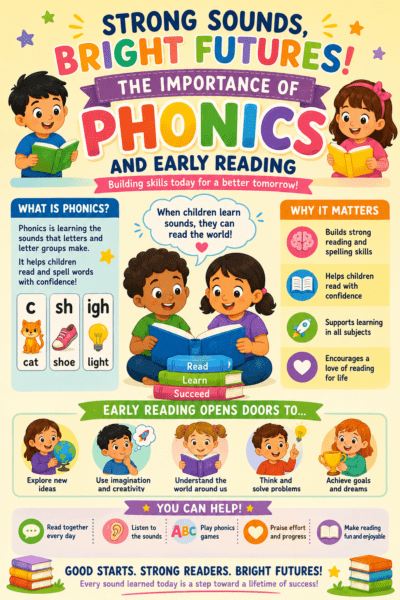
To achieve this, we follow the Reading Planet: Rocket Phonics scheme, which provides a systematic, synthetic phonics approach to early reading. Through daily, high-quality phonics sessions, children are explicitly taught grapheme-phoneme correspondences (GPCs) and how to apply this knowledge to decode and encode words accurately.
Our phonics teaching follows a carefully structured sequence, enabling children to build on prior learning and secure new knowledge. Alongside the teaching of GPCs, children are taught tricky words and high-frequency words that cannot be fully decoded using their current phonic knowledge. Regular opportunities for practice, review and application ensure that learning is embedded and retained.
Reading practice is closely matched to each child’s phonics knowledge through the use of carefully decodable reading books from the Reading Planet: Rocket Phonics scheme, as well as other reading publishers. This ensures that children can apply the phonics they have been taught, developing accuracy, fluency and confidence in reading.
Through consistent teaching, targeted support and high expectations, we aim for all children to become successful readers who develop a lifelong love of reading.
Please note: with regard to religious education, parents and carers should be aware they have the right to withdraw their child from all or part of RE. Please contact the school office for further information.
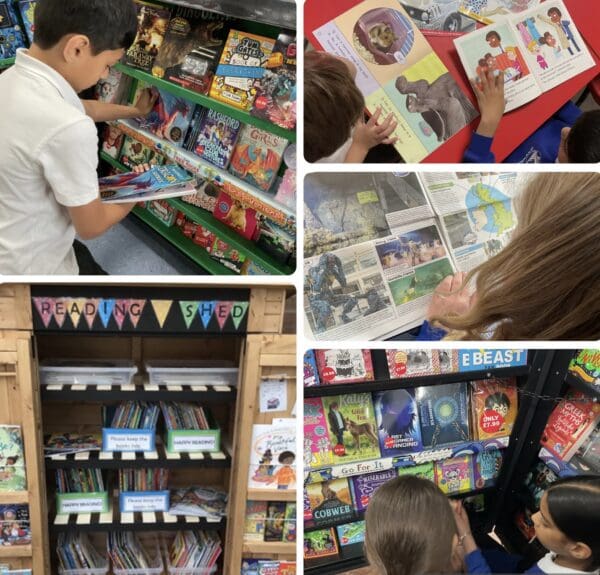
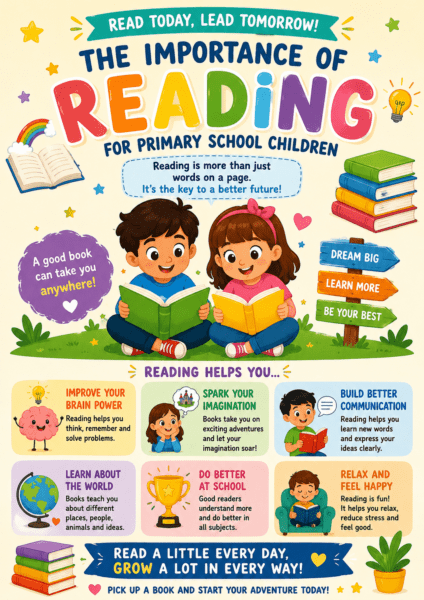
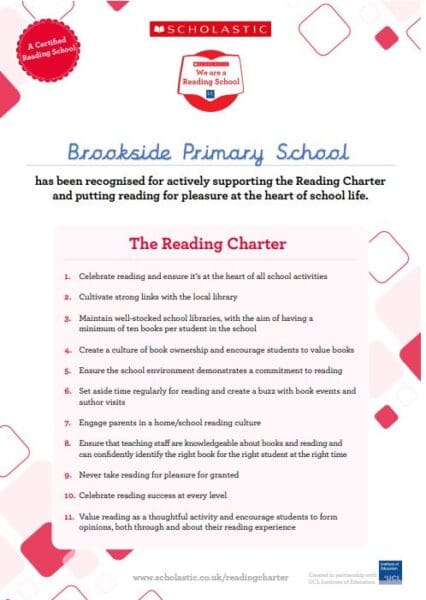
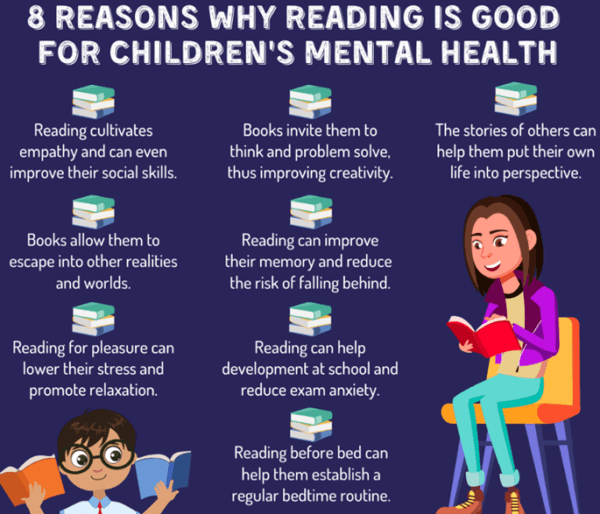
At Brookside, we are committed to ensuring that pupils make progress in all aspects of reading. We strive to help children understand and reflect on their own progress and development as readers, while enabling them to engage with a wide variety of texts, such as fiction, non-fiction, poetry, and reports, and to understand their different purposes. We aim to create a positive reading culture in which children enjoy reading, read regularly, and confidently discuss their reading experiences. We also encourage reading beyond the classroom by fostering strong partnerships with families and promoting reading at home.
At our school, we believe that every child deserves to see themselves reflected in the books they read and to discover the experiences, perspectives, and stories of others. We are committed to providing an inclusive reading environment that celebrates diversity in all its forms, including culture, ethnicity, language, religion, ability, and lived experience. Through a broad and carefully selected range of texts, we encourage all pupils to develop empathy, curiosity, respect, and a lifelong love of reading. We strive to create confident readers who understand and appreciate the rich diversity of the world around them and who recognise the power of stories to connect people and communities.
Children should have as many opportunities as possible to practice and develop their reading skills, at Brookside these include:
- Individual Reading (1:1 reading with an adult in school)
- Shared Reading
- Choral Reading
- Whole Class Reading
- Guided Reading
- Reading across the creative curriculum
- Independent reading
- Reading for Pleasure
- Story Time
- Home reading
PSHE Curriculum Statement
Curriculum Intent
At Brookside Primary School, our Personal, Social, Health and Economic (PSHE) curriculum supports pupils to develop the knowledge, skills and attributes they need to lead healthy, safe, responsible and fulfilling lives. It incorporates the statutory requirements for Relationships Education and Health Education within a broader, ambitious PSHE curriculum, informed by the PSHE Association Programme of Study and the Department for Education’s statutory guidance. GOV.UK
Our curriculum begins in the Early Years, where Personal, Social and Emotional Development (PSED) provides important foundations through self-regulation, managing self and building relationships. From Year 1, these foundations are progressively developed through a carefully sequenced curriculum that enables pupils to understand themselves and others, develop and maintain healthy relationships, make informed decisions and manage risks. Pupils learn how to protect their physical and mental health and wellbeing, stay safe both online and offline, recognise when something is wrong and know how and where to seek help.
Through PSHE, we prepare pupils for the opportunities, responsibilities and experiences of life, helping them develop respect for themselves and others and understand the diverse society in which they live. Our curriculum aims to develop confident, resilient and compassionate pupils who can make positive choices and participate responsibly in their communities and the wider world.
Intent
- To develop healthy and confident individuals: We support pupils to understand their physical and mental health and wellbeing, recognise and manage emotions, develop resilience and make informed choices that contribute to healthy lives.
- To build positive and respectful relationships: Pupils learn how to form and maintain healthy relationships, respect differences, understand appropriate boundaries and recognise the characteristics of relationships that are safe, caring and respectful.
- To equip pupils to keep themselves and others safe: We develop the knowledge and strategies pupils need to recognise risk and unsafe situations, including online, understand appropriate and inappropriate behaviour, and know when, how and where to seek help.
- To prepare pupils for change and growing up: We provide accurate, age-appropriate learning that enables pupils to understand and manage change, develop increasing independence and prepare confidently for puberty and the transitions they experience throughout primary education and beyond.
- To develop responsible and active citizens: Pupils learn to respect diversity, understand rights and responsibilities, make informed decisions and contribute positively to their communities, developing an age-appropriate understanding of money, work and the wider world.
This intent ensures that pupils progressively develop the knowledge, skills and attributes needed to manage their lives now and in the future, building the confidence and capacity to make informed decisions, navigate relationships and seek support when they need it.
Implementation
Our PSHE curriculum is informed by the PSHE Association Programme of Study and incorporates the statutory requirements for Relationships Education and Health Education. It is organised through three interconnected core themes, which provide a coherent framework for learning from Key Stage 1 to the end of Key Stage 2. PSHE Association
- Health and Wellbeing: Pupils develop their understanding of physical and mental health, emotions, healthy lifestyles, growing and changing, personal safety and how to access appropriate help and support.
- Relationships: Pupils learn about families, friendships and other relationships; respectful behaviour; diversity; boundaries; consent and permission; managing conflict; and recognising safe and unsafe relationships.
- Living in the Wider World: Pupils develop their understanding of belonging to communities, rights and responsibilities, respect for others, economic wellbeing, money, work and their increasing role as responsible citizens.
The curriculum is progressive and spiral, enabling pupils to revisit important concepts and build upon prior knowledge as their understanding and maturity develop. Learning is carefully sequenced so that increasingly complex concepts are introduced at an appropriate stage, while teachers respond sensitively to the needs and contexts of their pupils. This reflects PSHE Association guidance that effective PSHE is sequenced, revisits prior learning and develops progressively over time. PSHE Association
In the Early Years, PSED is both explicitly planned for and embedded throughout children’s experiences. Through play, relationships, routines, stories, discussion and adult modelling, children develop self-regulation, independence and positive relationships, establishing the foundations upon which the PSHE curriculum builds.
From Year 1 to Year 6, PSHE is explicitly taught through planned lessons alongside opportunities to reinforce and apply learning through the wider curriculum and life of the school. Discussion, scenarios, stories, role play and reflection provide opportunities for pupils to explore ideas, develop appropriate vocabulary, consider different perspectives and practise applying their learning. A safe and inclusive learning environment enables pupils to ask questions and discuss sensitive issues appropriately.
Relationships and Health Education are taught as integral parts of the PSHE curriculum in accordance with statutory guidance. Where primary sex education beyond the statutory science and Relationships and Health Education curriculum is provided, this is clearly identified, age-appropriate and taught in accordance with the school’s RSHE policy and statutory requirements. The DfE continues to recommend sex education in Years 5 and/or 6, although sex education itself is not compulsory in primary schools. GOV.UK
Safeguarding is woven throughout the curriculum. Pupils progressively develop the knowledge and vocabulary to recognise unsafe or inappropriate situations and behaviours, understand personal boundaries, stay safer online and offline, identify trusted adults and seek help. Teaching is inclusive and accessible, reflecting pupils’ different needs, experiences, families and backgrounds while promoting dignity, respect and equality.
Impact
The impact of our PSHE curriculum is that pupils become increasingly confident, resilient and responsible individuals who can make informed decisions about their health, relationships, safety and wellbeing. They develop the knowledge and vocabulary to recognise risk, establish appropriate boundaries, seek help and respond positively to the opportunities and challenges they encounter.
By the end of Key Stage 2, pupils demonstrate respect for themselves and others, value difference and understand their responsibilities within relationships, communities and the wider world. They are equipped with strong foundations for the next stage of their education and for navigating life with increasing independence, confidence and responsibility.
Brookside Unit Overview 2026 KS1
Brookside Unit Overview 2026 LKS2
Intent
For children to see themselves as scientists:
We aim to develop pupils’ sense of identity as scientists, so they see science as something they can all succeed in. Through practical and purposeful experiences, pupils recognise that science is relevant, accessible and connected to their everyday lives.
To develop the scientific knowledge and vocabulary needed to understand the world:
Pupils develop secure scientific knowledge and use subject-specific vocabulary accurately to explain, question and discuss scientific ideas. This enables them to communicate their understanding clearly and apply their learning across different contexts.
To develop the skills to work scientifically:
Our curriculum equips pupils with the skills needed to work scientifically, including questioning, predicting, investigating, testing, observing, recording and drawing conclusions. Pupils develop their ability to think critically, evaluate evidence and build understanding through enquiry.
To explore and understand the natural world:
Pupils are encouraged to explore, observe and appreciate the natural world. Through first-hand experiences, they develop understanding of scientific processes, patterns and relationships in the physical world.
To foster curiosity about the world around them:
Curiosity is central to our Science curriculum. Pupils are encouraged to ask questions, seek answers and develop a lifelong interest in how the world works.
Pupils leave our schools as curious, knowledgeable and reflective learners who are able to engage with and make sense of the world around them.
For our full intent statement please see the attached document.
Intent OAK Brookside Science 2026
Example Knowledge Organiser
Please see our Skills progression statements here.
Brookside Progression Of Scientific Enquiry Skills
Skills Progression EYFS Child Speak
Writing – Intent
At Brookside, we believe that every child should develop as a confident, capable and enthusiastic writer. Our writing curriculum is designed to inspire children to communicate effectively, express their ideas creatively and write with increasing accuracy, purpose and independence.
Through a carefully planned sequence of learning, pupils develop the knowledge and skills needed to write successfully for a range of audiences and purposes. Children are immersed in high-quality texts and rich language experiences that broaden their vocabulary, deepen their understanding of different genres and provide meaningful models for their own writing. We recognise the close relationship between reading and writing, using quality literature to support children in developing their understanding of language, structure and authorial craft.
Writing is taught through a clear process of planning, drafting, revising and editing, enabling pupils to reflect on and improve their work. Alongside this, grammar and punctuation are taught in context so that children understand how language choices can enhance meaning and impact.
The foundations of effective writing are supported through high-quality transcription teaching. Handwriting is taught through the Letter-join programme, helping pupils develop a fluent, legible and consistent script. Spelling is taught using the Rocket Phonics scheme in Reception and KS1 and then the No Nonsense Spelling programme in KS2, which provides a structured approach to spelling knowledge and strategies.
By the time pupils leave our school, they will have the confidence, technical accuracy and creativity to write effectively across the curriculum and for life beyond the classroom.